Mere Allegations Of Fraud Don't Give Civil Courts Jurisdiction In SARFAESI Cases: Gujarat High Court
Upasana Sajeev
23 Jan 2026 3:58 PM IST
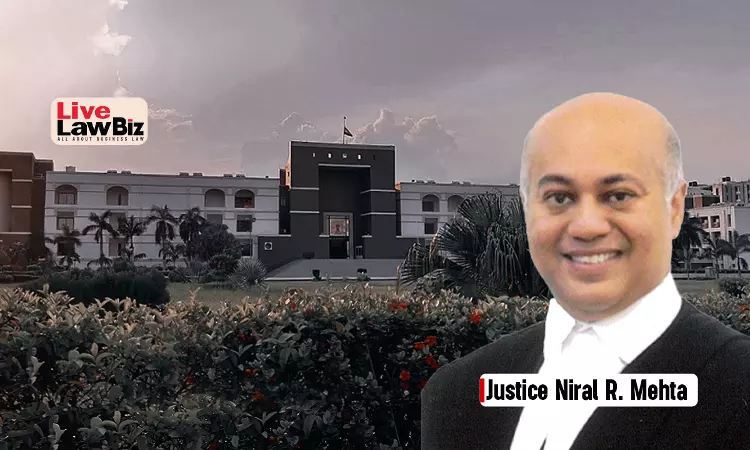
The Gujarat High Court has refused to interfere with SARFAESI recovery proceedings involving State Bank of India, holding that fraud or collusion allegations alone do not give civil courts jurisdiction when a statutory remedy lies before the Debt Recovery Tribunal.
Justice Niral R. Mehta said that challenges to such measures, including claims of fraud, must be raised before the Debt Recovery Tribunal (DRT), which has wide powers under Section 17 of the SARFAESI Act to examine the legality, validity, and enforceability of the security interest.
“In the circumstances, mere allegations of fraud or collusion cannot confer jurisdiction on the Civil Court to interfere with the statutory measures undertaken by the secured creditor under the SARFAESI Act,” the court observed.
The court further held that once an order for taking possession is passed under Section 14 of the SARFAESI Act, any injunction granted by a civil court would effectively amount to staying statutory proceedings. Such interference, the court said, is expressly barred under Section 34 of the Act.
“Once the possession order under Section 14 has been passed, any injunction granted by the Civil Court would, in effect, amount to staying the statutory proceedings under the SARFAESI Act,” the court said, warning that entertaining such pleas would allow unscrupulous borrowers to stall recovery proceedings through clever drafting.
The ruling came in an appeal against an order of the City Civil Court, Ahmedabad, which had refused to grant an interim injunction against SARFAESI proceedings initiated by the State Bank of India.
Varun Procon Pvt Ltd had stood as a corporate guarantor for Satsang Infrabuild Private Limited, which had received financial assistance of Rs 16.50 crore from State Bank of India. The company executed a corporate guarantee and subsequently created a mortgage in favour of the bank.
Varun Procon claimed that the mortgage was executed fraudulently and without valid authorisation of the company. In the meantime, SBI initiated recovery proceedings under the Recovery of Debts Due to Banks and Financial Institutions Act, 1993, before the Debt Recovery Tribunal, which passed an interim order against the company.
It also filed a civil suit seeking an injunction against the bank, without disclosing the pendency of the DRT proceedings. The injunction application remained dormant for nearly nine years.
In the meantime, SBI initiated proceedings under the SARFAESI Act by issuing a notice under Section 13(2). After objections were rejected, the bank obtained an order under Section 14 of the Act from the competent court for taking possession of the secured assets.
Only thereafter did the appellant press the pending civil injunction application. The civil court dismissed the plea, leading to the present appeal.
The High Court noted that there was no dispute that the appellant was a corporate guarantor. Under Section 2(f) of the SARFAESI Act, a corporate guarantor falls within the definition of a “borrower.”
Any grievance against measures taken under the Act, the court held, must therefore be adjudicated by the DRT. Since the SARFAESI Act provides a complete and efficacious statutory remedy, allowing parallel civil proceedings at the interim stage would defeat legislative intent and render the bar under Section 34 otiose.
Finding no merit in the appeal, the court dismissed it.
For Appellants: Senior Advocate I.H. Syed with Advocate Aditya J. Pandya.
For Respondents: Senior Advocate P.C. Kavina with Advocate Bhavna D. Acharya.