High Court of J & K and Ladakh
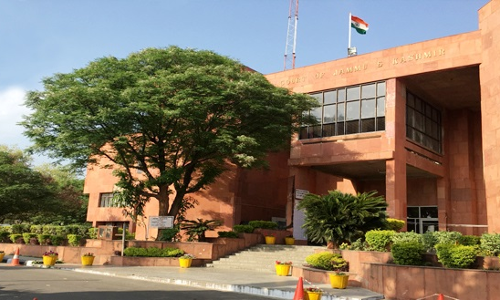
J&K High Court Sets Aside Interim Order Against Developer Passed By Special Tribunal Without Jurisdiction
The Jammu & Kashmir and Ladakh High Court has set aside a status quo order passed against a real estate developer by the Jammu and Kashmir Special Tribunal, which was functioning as the interim Real Estate Appellate Tribunal. Justice Rahul Bharti held that once a tribunal acknowledges that it lacks jurisdiction, it cannot issue or continue any interim or supplementary directions. Any such directions, the court said, are “nugatory in the eyes of law”. The petition was filed by Royal Omkar...
GST Refund Is Vested Right, Cannot Be Limited By Retrospective Application Of 2019 Amendment: J&K&L High Court
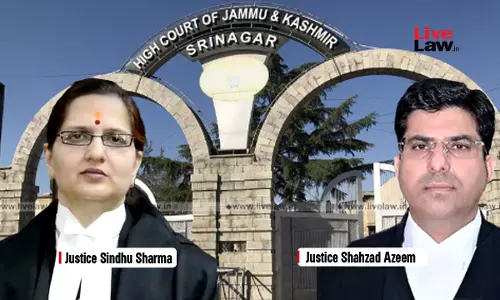
The High Court of Jammu & Kashmir and Ladakh has held that the 2019 amendment to the GST law changing the limitation period for claiming refund of unutilised input tax credit cannot be applied retrospectively to deny refund claims relating to periods prior to 1 February 2019.The Division Bench of Justice Sindhu Sharma and Justice Shahzad Azeem while deciding a writ petition filed by Bharat Oil Traders, a partnership firm engaged in the refilling and sale of edible oil and ghee.The petitioner...
Availability Of Civil Remedy Not Grounds To Quash Criminal Proceedings: J&K High Court Holds In Enso Tower Dispute
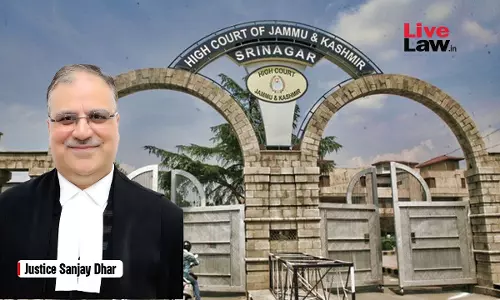
The High Court of Jammu & Kashmir and Ladakh recently held that the mere existence of a civil or commercial dispute does not bar criminal prosecution, if the allegations in a complaint disclose the commission of a criminal offense. Noting that same facts might result in both civil and criminal remedies, the bench comprising of Justice Sanjay Dhar, on 26th December, 2025, rejected to quash a 2020 theft FIR arising from a landlord-tenant dispute at Enso Tower. Zaffar Abbas Din, a landlord,...
Second Arbitral Reference Maintainable When Award Is Set Aside Without Adjudication On Merits: J&K&L High Court
The Jammu & Kashmir and Ladakh High Court has held that a second reference to arbitration is maintainable where an arbitral award has been set aside under section 34 of the Arbitration and Conciliation Act, 1996 ("Arbitration Act") without any adjudication on merits of the claims, leaving the underlying disputes unresolved. Justice Sanjay Dhar said while allowing the application seeking appointment of a fresh arbitrator after the earlier award had been set aside by the Designated...
Arbitral Tribunal Not Declared As “Court”, False Evidence Before Arbitrator Does Not Attract S.195 CrPC: J&K&L High Court
Clarifying the scope of criminal law in arbitral proceedings, the High Court of Jammu & Kashmir and Ladakh has held that the bar contained in Section 195 of the Code of Criminal Procedure does not apply to allegations of false evidence given before an Arbitral Tribunal, as an arbitrator is not a “court” within the meaning of that provision.“… the term “Court” has been defined in sub-section (3) of Section 195 of Cr. P. C to mean a civil, revenue or criminal court and it includes a Tribunal...
Once GST Appeal Is Filed On Portal, No Mandatory Requirement To File Hard Copy Or Certified Copy Of Order: J&K&L High Court
The Jammu & Kashmir and Ladakh High Court held that once a GST appeal is filed electronically within the statutory period along with the uploaded order, there is no requirement to file a hard copy or certified copy of the order. Justices Sindhu Sharma and Shahzad Azeem stated that the appeal was filed online within statutory period along with the copy of order and therefore, there was no requirement of filing the hard copy of the same. Therefore, its rejection on the ground of not...
Past Employment With Party Does Not Make Arbitrator Ineligible: J&K&L High Court Reaffirms
The Jammu and Kashmir and Ladakh High Court on Monday reiterated that an arbitrator does not become ineligible merely because he was employed by one of the parties in the past. The court held that past government service, by itself, does not indicate bias under the Arbitration and Conciliation Act unless it is shown that the arbitrator has a continuing business relationship or had advised a party in connection with the dispute. Justice Sanjay Dhar delivered the ruling on December 22, 2025,...
GST Demand Cannot Exceed Amount Mentioned In Show Cause Notice: J&K&L High Court
The Jammu & Kashmir and Ladakh High Court has held that a tax demand under GST cannot exceed the amount mentioned in the show cause notice and that doing so violates basic principles of fairness. The Division Bench of Justice Sanjeev Kumar and Justice Sanjay Parihar set aside a GST demand raised against a goods transport agency (GTA), after finding that the final demand was much higher than what was proposed in the original notice. The Goods Transport Agency challenged a show...
'GST Is Fiscal Compliance, Not Regulatory Exemption': J&K High Court Says Brick Dealers Still Need Licence Under Brick Kiln Act
The Jammu & Kashmir High Court has upheld the validity of the Jammu and Kashmir Brick Kiln (Regulation) Act, 2010 and the 2017 Rules, ruling that the regulatory framework applies not only to manufacturers but also to brick dealers, rejecting challenges raised by multiple petitioners.The High Court rejected the plea that GST registration obviated the licensing requirement under the Brick Kiln Act, stating, “GST registration pertains to fiscal compliance… the Brick Kiln Act is a regulatory...
Payment Of Tax Cannot Legalise Unlicensed Activity, GST Registration Doesn't Confer Right To Conduct Business: J&K&L High Court
The High Court of Jammu & Kashmir and Ladakh has held that obtaining registration under the Goods and Services Tax Act, 2017, does not amount to authorisation to conduct a trade or business, nor can payment of tax legitimise an otherwise unlicensed commercial activity.The High Court clarified that taxation statutes and regulatory licensing statutes operate in distinct spheres, and compliance with one cannot override mandatory licensing requirements under another.The Court was hearing a batch...
[S.6 CGST Act] J&K&L High Court Upholds GST Show Cause Notices Based On Intelligence Inputs
The Jammu & Kashmir and Ladakh High Court has held that intelligence-based enforcement actions can be initiated by either the Central or the State tax authorities, irrespective of taxpayer assignment, and such actions do not require a separate notification for cross-empowerment.The court dismissed a batch of writ petitions filed by several companies challenging show cause notices issued under the Central Goods and Services Tax Act, 2017 (“CGST Act”) on the ground of lack of jurisdiction. A...
[CGST Act] Penalty Is An 'Additional Tax', Cannot Be Levied Under State Act Without 'Charging Provision': J&K&L High Court
The Jammu & Kashmir and Ladakh High Court has ruled that the penalty under the Central Sales Tax Act cannot be imposed by invoking provisions of the State Act in the absence of an express charging section.The Court held that the Central Act is a “self-contained code” and provides its own framework for imposition of penalties, which cannot be supplemented by state laws.A bench headed by Justice Sanjeev Kumar, Justice Sanjay Parihar dismissed the petition challenging the absence of a penalty...