
Delhi High Court
Availability Of Drug For Rare Diseases At Economical Prices Material Factor To Be Considered Before Restraining Via Interim Injunction: Delhi HC
The Delhi High Court has observed that availability of a drug for treatment of rare diseases at economical and competitive prices is a material factor to be considered for grant of interim injunction in an intellectual property right (IPR) lawsuit. “A drug which is the only one available for treatment in India, for a rare disease, its availability to the public at large at very economical and competitive prices, is a material factor which a Court will consider at the time of dealing with an...
Court's Jurisdiction U/S 11(6) Of A&C Act Is Decided Under CPC When No Seat Or Venue Is Specified In Arbitration Agreement: Delhi High Court
The Delhi High Court bench of Justice Manoj Kumar Ohri has held that in the absence of a specified seat or venue in the Arbitration Agreement, the court's jurisdiction under Section 11 of the Arbitration and Conciliation Act, 1996 (Arbitration Act) is determined by Sections 16 to 20 of the Civil Procedure Code, 1908 (CPC). The relevant factors include where the respondent resides or conducts business and where the cause of action arose. Brief Facts: The parties entered into an...
Court Can Appoint Arbitrator U/S 11(6) Of Arbitration Act If MSME Council Fails To Initiate Mediation U/S 18 Of MSMED Act: Delhi HC
The Delhi High Court bench of Justice Jasmeet Singh has held that When the Facilitation Council under the Micro, Small, and Medium Enterprises Development Act (MSMED Act) fails to initiate the mediation process under Section 18 of the MSMED Act, the court can appoint an arbitrator under Section 11(6) of the Arbitration and Conciliation Act, 1996 (Arbitration Act). Brief Facts: The respondent placed a Letter of Intent for execution of civil and associated work for construction of New...
Participation In Arbitral Proceedings Does Not Imply Acceptance Of Unilateral Appointment Of Arbitrator Unless Objections Are Waived In Writing: Delhi HC
The Delhi High Court bench of Justice Subramonium Prasad has held that the mandate of the Arbitrator can be terminated under Section 14 of the Arbitration and Conciliation Act, 1996 (Arbitration Act) if the Arbitrator was appointed unilaterally, which is explicitly prohibited under Section 12(5) of the Arbitration Act unless the ineligibility is expressly waived through a written agreement. It also held that mere participation in the arbitration proceedings without expressly waiving any ...
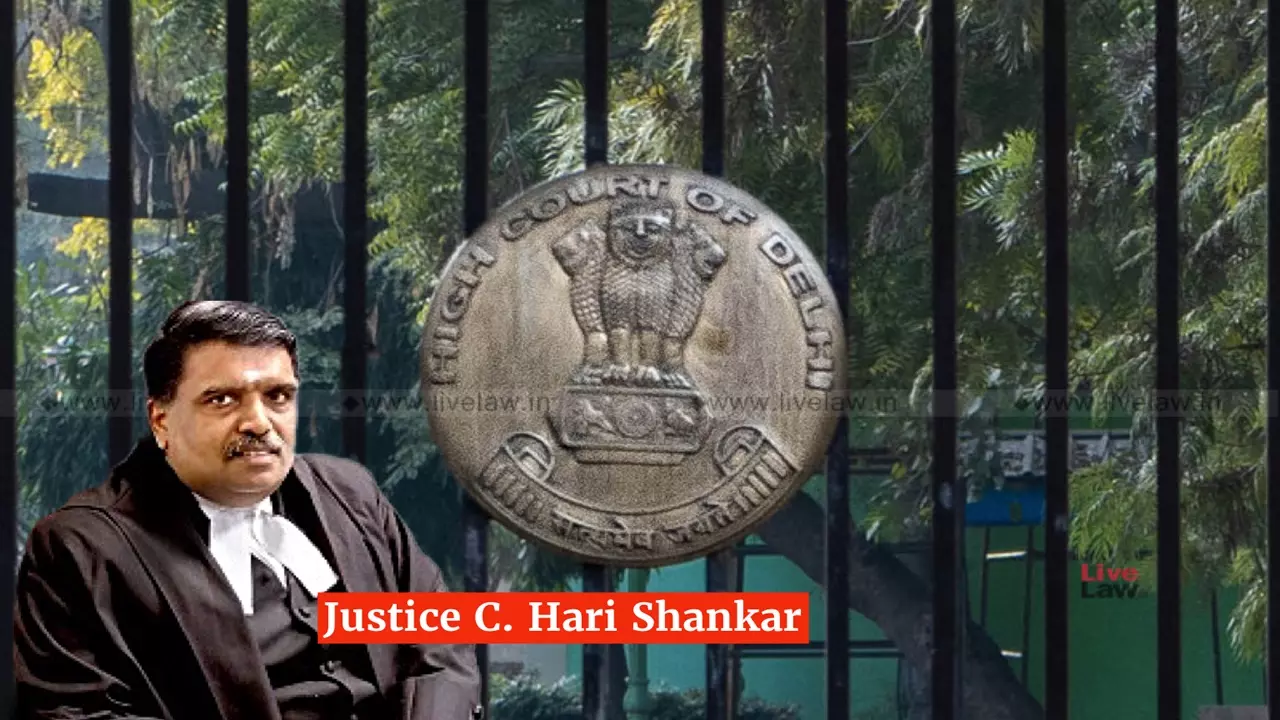
Exclusive Jurisdiction Clause Prevails Over Seat Of Arbitration Clause If It Expressly Covers Proceedings Relating To Arbitration: Delhi HC
The Delhi High Court bench of Justice C. Hari Shankar has observed that generally if an agreement contains both exclusive jurisdiction clause and seat of arbitration clause, then judicial proceedings relating to arbitration would lie only before the court having territorial jurisdiction over the arbitral seat/venue. However, as in the instant case, if the exclusive jurisdiction clause also covers proceedings relating to arbitration then it would prevail over the seat of arbitration...

NRI's Entitled To Benefits Provided To 'Eligible Passengers' Under 2016 Baggage Rules: Delhi High Court
The Delhi High Court has held that a non-resident Indian is fully entitled to the benefit provided to an “eligible passenger” under the Baggage Rules, 2016 for the purposes of Customs on arrival to India.Eligible passenger was defined by the Finance Ministry via a Notification dated June 30, 2017, to mean a passenger of Indian origin or a passenger holding a valid Indian passport, coming to India after not less than six months of stay abroad.Baggage Rules allow duty-free clearance of certain...
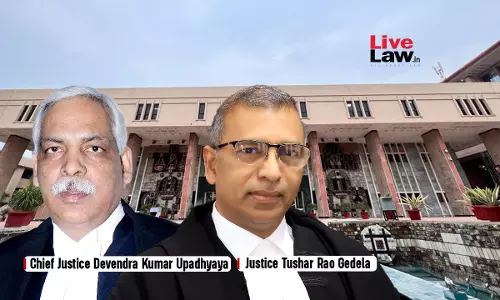
'Proof Beyond Reasonable Doubt' Is A Principle Of Criminal Law, Not Applicable To Tax Law: Delhi High Court
The Delhi High Court has made it clear that the principle of 'proof beyond reasonable doubt' cannot be made applicable to Section 148 of the Income Tax Act, 1961 which enables an assessing officer to open an assessment if he has 'reason to believe' that an assessee's income escaped assessment.A division bench of Chief Justice Devendra Kumar Upadhyaya and Justice Tushar Rao Gedela observed, “It is trite that the concept of “proving beyond reasonable doubt” applies “strictu senso” to penal...
Transfer Pricing | 'Resale Price Method' Most Appropriate To Determine ALP Where Distributor Makes No Value Addition To Imported Products: Delhi HC
The Delhi High Court has made it clear that where the distributor of an imported product makes no value addition to it before sale, Resale Price Method is the most appropriate method to determine the arm's length price in relation to its business with an Associated Enterprise.A division bench of Chief Justice Devendra Kumar Upadhyaya and Justice Tushar Rao Gedela thus dismissed the appeal preferred by Revenue against a Solar products distributor, which imported goods from an Associated...
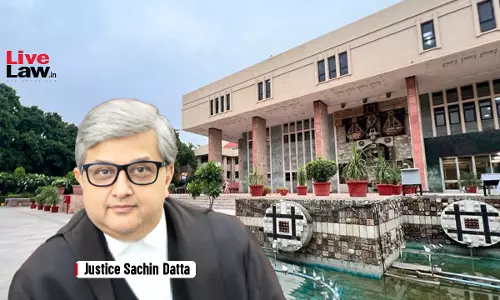
Delhi High Court Slams Directorate General Of Foreign Trade For Cancelling Trader's DEPB License 15 Yrs After SCN Was Issued
The Delhi High Court recently quashed a Directorate General of Foreign Trade (DGFT) communication cancelling the license issued to a trader involved in import and export of goods, citing almost fifteen years delay in culminating the show cause notice.Justice Sachin Datta cited Vos Technologies India Pvt. Ltd. v. The Principal Additional Director General & Anr. (2024) where the Delhi High Court had emphasized that matters which have the potential of casting financial liabilities of penal...
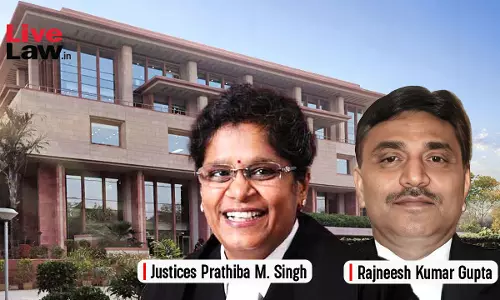
Delhi High Court To Examine Scope Of Customs Jurisdiction Under E-Cigarettes Act After Seizure Of "De-Addiction" Devices
The Delhi High Court is set to examine the extent of jurisdiction which can be exercised by the Customs Department under the Prohibition of Electronic Cigarettes (Production, Manufacture, Import, Transport, Sale, Distribution, Storage and Advertisement) Act, 2019.A division bench of Justices Prathiba M. Singh and Rajneesh Kumar Gupta have sought the authority's response on a private company's petition challenging seizure of its imported “empty atomizer devices” purportedly to be put to use for...
Arbitral Tribunal Is Sole Judge Of Evidence, Court Not Required To Re-Evaluate Evidence U/S 34 Of Arbitration Act: Delhi High Court
The Delhi High Court bench of Justice Vibhu Bakhru and Justice Tejas Karia held that the arbitrator is the ultimate master of the quantity and quality of evidence to be relied upon when he delivers his arbitral award. An award would not be held invalid merely because the award is based on little evidence or on evidence which does not meet the quality of a trained legal mind. Also, the Court held that it is not required to reappreciate or reevaluate the evidence and reagitate the...
Application U/S 34 Of Arbitration Act Not Maintainable If Not Filed With Copy Of Arbitral Award: Delhi High Court
The Delhi High Court division bench of Justice Yashwant Varma and Justice Harish Vaidyanathan has held that an application under Section 34 of the Arbitration and Conciliation Act, 1996 is non-maintainable if it is not accompanied by a copy of the impugned award. The court held that the filing of the award is not a mere procedural requirement but a mandatory prerequisite for invoking the court's jurisdiction under Section 34. Brief Facts: The appeal before the Division Bench was...