
Calcutta High Court
Post-Award Claim For Reimbursement Of Municipal Tax Is Not Maintainable U/S 9 Arbitration Act: Calcutta High Court
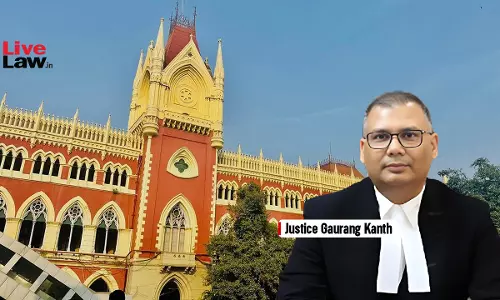
The Calcutta High Court held that a partner cannot claim reimbursement of municipal tax payments through a post award petition filed under section 9 of the Arbitration and Conciliation Act, 1996 (Arbitration Act) as such issue constitutes substantive monetary dispute requiring adjudication under section 34 of the Arbitration Act. Justice Gaurang Kanth dismissed the petition filed by partners of M/s. Chander Niwas seeking directions for reimbursement from other partners of their share of...
Not Reasonable To Expect Taxpayer To Check Every Tab On GST Portal: Calcutta High Court Orders Appeal To Be Heard Despite Delay
The Calcutta High Court has held that where an adjudication order under the GST regime is uploaded on the GST Portal only under the “View Additional Notices and Orders” tab rather than the primary “View Notices and Orders” tab the resulting delay in filing appeal is to be condoned, considering that taxpayers cannot reasonably be expected to check multiple tabs for final orders. A Single Bench of Justice Om Narayan Rai, while hearing a writ petition filed under the WBGST/CGST Act,...

Invention Requiring Destruction Of Human Embryos Not Patentable: Calcutta High Court
The Calcutta High Court on Monday upheld the Patent Office's rejection of a patent application on the grounds that the invention involved the destruction of human embryos and was therefore unethical and contrary to public order and morality.A single bench of Justice Ravi Krishan Kapur, affirming the Patent Office's decision to reject the invention under Section 3(b) of the Patents Act, 1970, noted that Section 3(b) prohibits patents for inventions whose main use or commercial purpose is against...

Calcutta High Court Cancels “JAY'S” Trademark, Citing Similarity to PepsiCo's “LAY'S”
The Calcutta High Court has recently ordered the cancellation of the registered trademark “JAY'S”, finding it phonetically identical and deceptively similar to PepsiCo's well-known potato chips brand “LAY'S”. A single bench of Justice Ravi Krishan Kapur passed the order on November 10, 2025, while hearing PepsiCo's application under Sections 47 and 57 of the Trade Marks Act, 1999, seeking the cancellation of the rival mark. The Court noted that Jagdamba Foods, the proprietor of “JAY'S”, was...
Once Resolution Plan Succeeds, Appeals Before CESTAT Abate, CENVAT Reversal Not Pre-Deposit: Calcutta High Court
The Calcutta High Court has upheld the disallowance of ₹165 crores of CENVAT credit on steel structures, parts, accessories, and cement as confirmed earlier by the Kolkata Bench of the Customs, Excise and Service Tax Appellate Tribunal (CESTAT).Justice Raja Basu Chowdhury, on the issue of abatement of the appeals, dismissed the grounds of challenge relating to (i) abatement of appeals before the CESTAT, and (ii) the Tribunal's jurisdiction to adjudicate the issue after the Corporate Insolvency...

Second Appeal Not Maintainable Under Trade Marks Act: Calcutta High Court Dismisses Dunlop's Appeal
The Calcutta High Court recently reaffirmed that a second appeal against a Single Judge's order is not permissible under the Trade Marks Act, 1999. The court clarified that once an appeal from an order passed by the Registrar of Trademarks is decided by a Single Judge, no further appeal can be filed before a Division Bench in view of the bar under Section 100A of the Civil Procedure Code (CPC).A Division Bench comprising Justice Arijit Banerjee and Justice Om Narayan Rai delivered the ruling on...
Civil Courts Cannot Grant Ex-Parte Injunction In Shareholder Disputes Due To Bar U/S 430 Companies Act: Calcutta High Court
The Calcutta High Court bench presided over by Justice Aniruddha Roy, has observed that a civil court cannot grant an ex parte ad interim injunction in a shareholder dispute, in light of the bar under section 430 of the Companies Act, 2013. The plaintiff filed a civil suit before the Civil Judge, Senior Division, Alipore, alleging that his shares in the Power Tools and Appliances Co. Pvt. Ltd. had been illegally reduced, usurping his control over the company. The court passed an...
Property Tax Is First Charge On Property; Auction Purchaser Liable To Pay It Before Sale: Calcutta High Court
The Calcutta High Court has held that property tax is a first charge on property and the auction purchaser is liable to pay property tax prior to sale. The bench stated that where a statutory first charge is created on the property, such as in respect of property tax under Section 232 of the Kolkata Municipal Corporation Act, 1980, the municipal authority is entitled to enforce such charge independently in accordance with the statutory mechanism provided therein. In such a situation,...

Power Of High Court To Extend Arbitrator's Mandate Is “Co-Extensive” With Power To Appoint Arbitrator: Calcutta HC
The Calcutta High Court has held that when an arbitrator is appointed by the High Court under section 11 of the Arbitration and Conciliation Act, 1996 (Arbitration Act), an application under section 29A(4) seeking extension of the mandate of the arbitrator can be entertained by the High Court only and not by the Principal Civil Court or Commercial Court having territorial jurisdiction over the subject matter. Justice Shampa Sarkar held that while section 2(e) of the Arbitration Act...
Single Petition U/S 34 Of Arbitration Act Is Maintainable Against Composite Arbitral Award: Calcutta High Court
The Calcutta High Court has held that a single petition under section 34 of the Arbitration and Conciliation Act, 1996 (Arbitration Act) is maintainable challenging a composite arbitral award disposing of multiple references. A bench led by Justice Shampa Sarkar held that “the Court does not hesitate to hold that the learned arbitrator and the parties understood the proceeding before the learned arbitrator arising out of five references, to be one composite proceeding and the learned...
Plea Against Misuse Of Digital Signature Does Not Amount To Denying Existence Of Arbitration Agreement: Calcutta High Court
The Calcutta High Court Bench of Justice Krishna Rao, while referring parties to arbitration, has observed that if the Plaintiff alleges that its digital signatures were used without its consent, such an allegation of fraud does not amount to a denial of the existence of the arbitration agreement. Facts The Plaintiffs had filed an application praying for an interim order, whereas the Defendants had filed an application praying that the parties be referred to arbitration....
Court Hearing Appeal U/S 37 A&C Act Can Direct Furnishing Of Security Even Without Application U/S 9: Calcutta HC
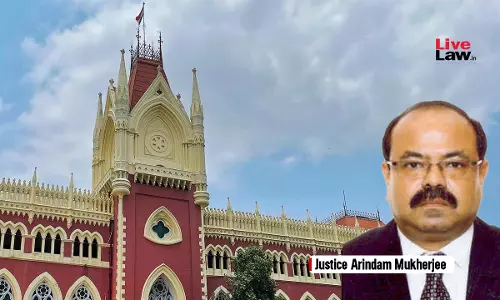
The Calcutta High Court bench of Justice Arindam Mukherjee has held that while disposing of an appeal under Section 37 of the Arbitration Act, the Court is empowered under Order 41 of the Civil Procedure Code, 1908 (CPC) to impose conditions and direct the respondent to furnish security for the loan as per the Agreement, even in the absence of a formal application under Section 9 of the Arbitration Act, since such a course does not contravene any of the provisions of the Act. The...